
How Malta’s History Shapes Its Identity
Blog
News
08 Feb 2026
To understand a Maltese person, you must first understand the rock they stand on. For 7,000 years, Malta has been the “stepping stone” of the Mediterranean. From the silent, prehistoric temple builders to the stoic resilience of the WWII generation, the Maltese identity is a masterclass in adaptation. In February, as the “Grigal” winds whip against the bastions of Valletta, you can feel the weight of Malta’s history more than ever. It is a month where the islands shed their “tourist resort” skin & reveal their true, rugged character.
The Language
The most immediate way Malta’s history shapes its identity is through the air – specifically, the words spoken in it.
- The Historical Root: Maltese is the only Semitic language (descended from Siculo-Arabic) written in the Latin alphabet. It’s a linguistic “fossil” of the Arab period (870-1091 AD), later seasoned with Italian, French, & English.
- The Weather Element: Spend a rainy February morning in a traditional coffee shop (ħanut tat-te) in Qormi or Żebbuġ. As the rain drums on the corrugated metal shutters, listen to the locals. The language sounds like the land itself – guttural, rhythmic, & incredibly durable.
The Architecture
Malta’s identity is literally etched into its limestone. Every era of rule left a physical mark designed to combat either an enemy or the elements.
- The Knights Of St. John: They built Valletta not just as a city, but as a “fortress built by gentlemen for gentlemen”. The high bastions were meant to keep out the Ottomans, but they also serve a modern purpose in February.
- The Weather Element: The narrow, grid-like streets of Valletta were designed to allow the cool sea breeze to circulate during the summer. In February, these same streets act as wind tunnels for the crisp Mediterranean air. Standing on the Upper Barrakka Gardens in the winter chill, looking over the Grand Harbour, you realise that Malta’s identity is one of defiance – a nation built to withstand both cannonballs & the “Grigal” storms.
Faith & The February Shipwreck
Perhaps nothing defines the Maltese spirit more than its deep-rooted Catholicism, a pillar of identity that traces back to a single stormy day in 60 AD.
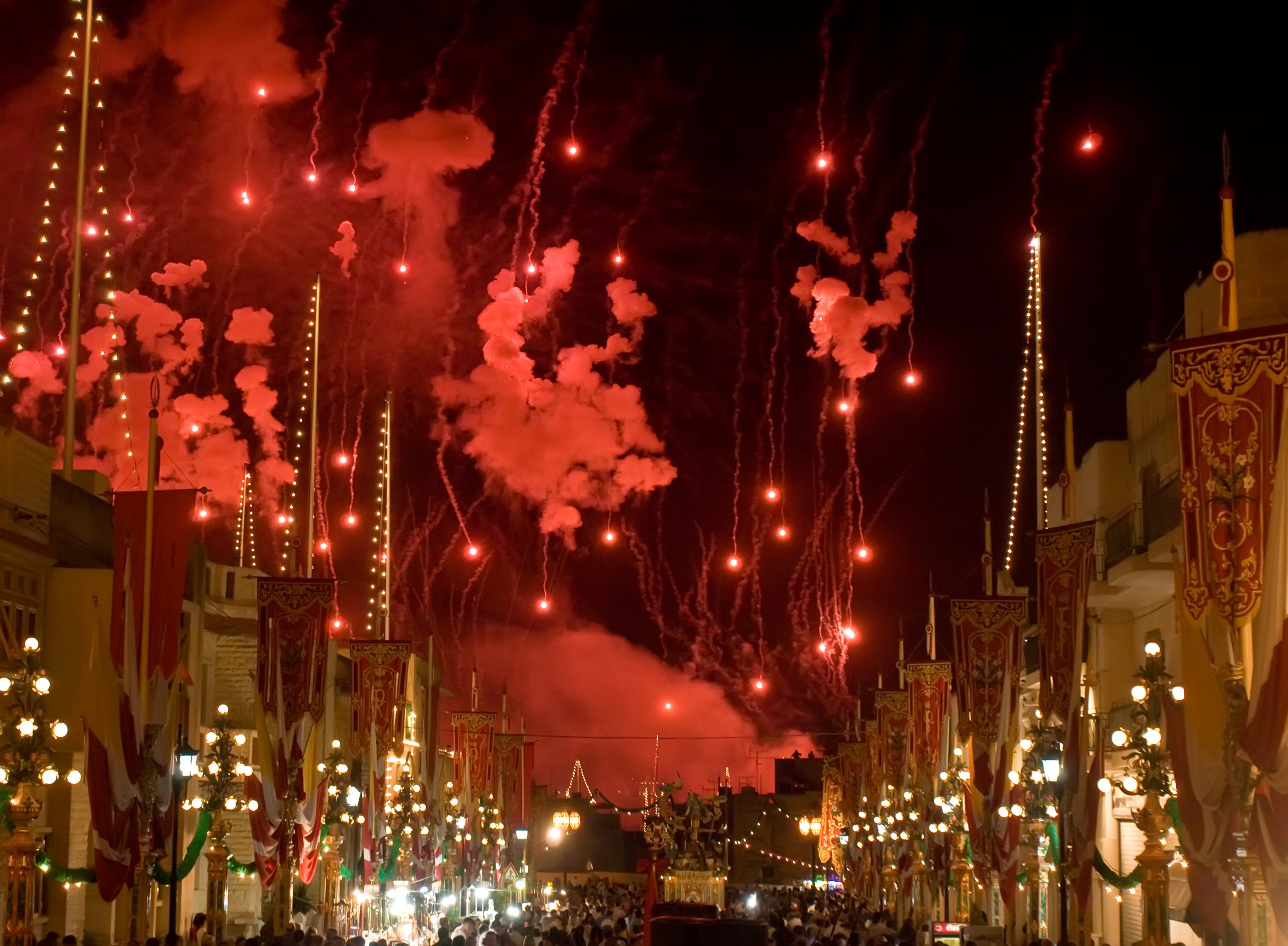
- The Event: St. Paul was famously shipwrecked on Malta while en route to Rome. This event is so central to the national identity that the Feast of St. Paul’s Shipwreck is a national holiday celebrated every February 10th.
- The Connection: Celebrating this feast in February is poetic. The unpredictable winter weather of the Mediterranean is exactly what brought the Saint to these shores. When you see the statues being carried through the streets of Valletta in the cool February air, you aren’t just seeing a religious rite; you’re seeing a celebration of an accidental encounter that changed the islands forever.
The British Legacy
The 164 years of British rule (1800-1964) added the final layer to the modern Maltese identity – a sense of orderly “Britishness” mixed with Mediterranean warmth.
- The George Cross: Malta is the only nation to be collectively awarded the George Cross for its bravery during the Siege of WWII. This “nurse of the Mediterranean” identity is a source of immense pride.
- The Weather Element: February is the most “British” month in Malta. The lush green countryside of the north, the morning mist over the fields of Mġarr, & the occasional drizzle make the red post boxes & English-style pubs feel right at home. It’s the perfect weather for a brisk walk along the Victoria Lines, the 12km fortification that the British built along a natural geological fault.
| Identity At A Glance: The 4 Pillars | ||
| Historical Influence | Modern Identity Marker | Why February? |
| Arab Rule | The Maltese Language | Best time for “slow travel” & listening to local life |
| Knights of St. John | The Bastioned Cities | Dramatic winter light highlights the golden limestone |
| St. Paul | Religious Devotion | February 10th is the Feast of the Shipwreck |
| British Empire | Democracy & English Fluency | The “Green Season” mirror a British spring |
Malta’s history hasn’t just passed through the islands; it has been absorbed into the very DNA of its people. Visiting in February allows you to skip the “sun & sea” distractions & meet the real Malta – a place of quiet strength, ancient stories, & a winter beauty that is as solid as the rock itself.